



Beginner's Guide to Rain Boot Materials: Rubber, PVC, Neoprene, and Polyurethane
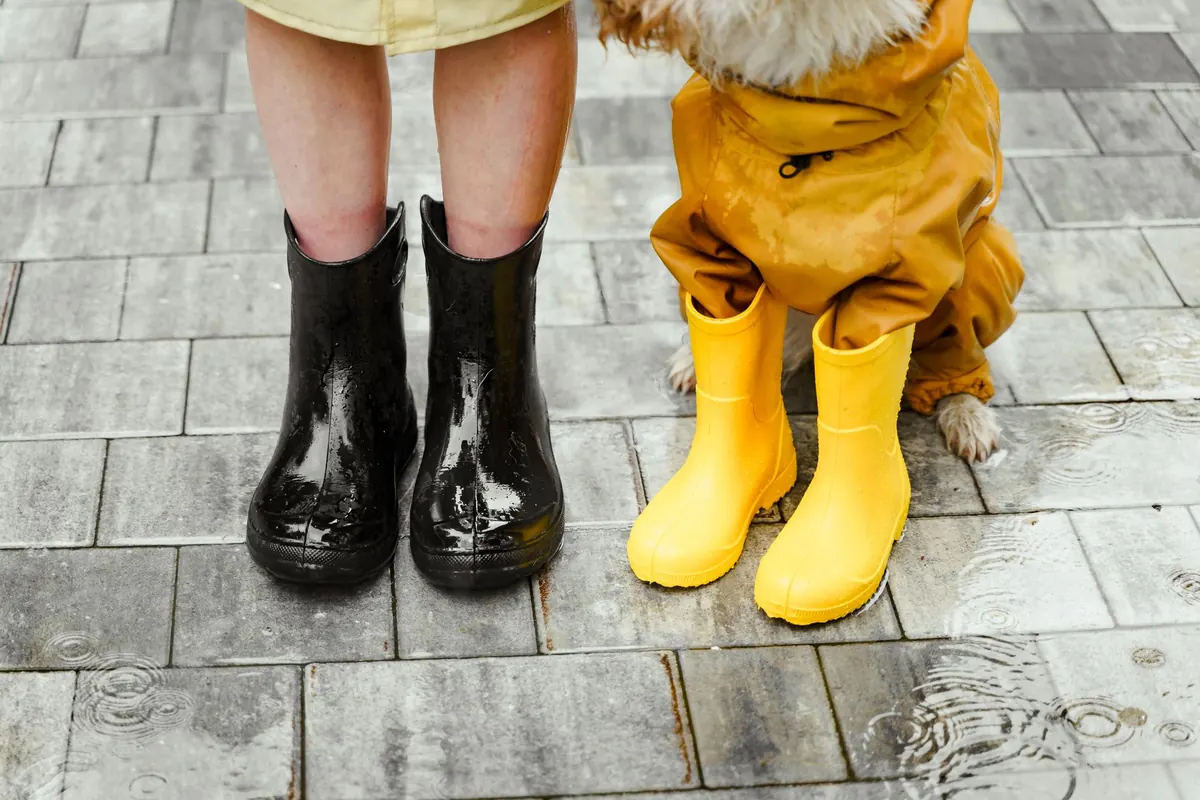
You can usually spot a bad rain boot moment before it happens: the foot sliding forward on a wet tile step, the cold toes twenty minutes into a dog walk, the smell that greets you when you pull them out of the cupboard in October. Most of those problems trace back to one decision made before you ever put them on — the material the boot is made from.
Rubber, PVC, neoprene and polyurethane are the four you'll meet in almost every shop and listing. They all keep water out. They differ in nearly everything else.
What You're Actually Judging
Four qualities decide whether a boot feels good or fights you: grip, warmth, flexibility and odour resistance. Before comparing materials, it helps to know where each quality comes from.
Grip is almost entirely the outsole — the tread pattern and rubber compound underneath, not the pretty upper. A soft, deep-lugged sole grips wet stone and mud; a hard, shallow one skates on both. So when a boot description raves about the upper and says nothing about the sole, that's a gap worth noticing.
Warmth comes from insulation and thickness, not waterproofing. A thin unlined rubber boot is cold at 4°C. Flexibility matters more than people expect if you drive, cycle, kneel in a garden or walk any distance. And odour is nearly always a story about sweat that can't escape — which is why the warmest materials are also the smelliest.
Waterproof is the baseline. Grip, warmth, flex and smell are what you're really choosing between.
Natural Rubber: The All-Rounder
Rubber is the classic. It's elastic, waterproof, and comfortable in a way that stiffer plastics aren't — it softens with body heat and moulds around the shape of your foot over a season or two. A well-made rubber boot with a good sole grips wet pavement, mud and gravel reliably.
The trade-offs are weight, cold and smell. Rubber boots are heavier than polyurethane ones, and the compound stiffens as temperatures drop, so a rubber boot at −5°C is noticeably less pleasant than the same boot in autumn. New ones also smell faintly of sulphur, like a tyre shop; that fades with a few days of airing, but it doesn't vanish on day one.
Rubber also degrades over the years with sunlight and ozone exposure. Store them out of direct sun and away from radiators, and a decent pair will last many seasons. Best for: everyday town wear, gardening, dog walks and three-season use.
PVC: Cheap, Stiff, and Honest About It
Polyvinyl chloride is the material behind most very inexpensive boots, including a lot of children's pairs. It's genuinely waterproof, easy to clean and cheap to produce.
What you give up is comfort. PVC has little of rubber's elasticity, so it feels rigid around the ankle and instep. It also hardens sharply in cold weather — below freezing, a PVC boot behaves more like a plastic shell than footwear, and repeated flexing at the same crease can eventually split it. Grip on wet, smooth surfaces is often modest, and the plasticky smell out of the box is stronger and longer-lasting than rubber's.
That doesn't make PVC useless. If you need something to dash to the bin, wash the car or slosh through a muddy garden for twenty minutes, it does the job for very little money. Just don't buy it expecting all-day comfort in January.
Neoprene: Warm and Stretchy, With a Catch
Neoprene is a synthetic rubber, and it's the material that keeps divers and surfers warm in cold water — it insulates even when wet. Many so-called neoprene boots are actually a rubber shell with a neoprene upper or lining, which is a sensible combination: rubber where the water is, neoprene where the cold is.
It's stretchy, so it hugs the foot and ankle, and it's the warmest option here by a wide margin. For winter fishing, hunting, farm work or standing around in the cold, it's hard to beat.
The catch is sweat. Any material that traps heat that well also traps moisture, and warm, damp feet are exactly what bacteria want. Neoprene boots get whiffy faster than any other type unless you manage them: wear wool or moisture-wicking socks, dry them fully inside out, and ideally alternate two pairs so each has a day to air. They're also bulkier, heavier and pricier, and the stiff, padded feel makes them awkward for driving.
Polyurethane: Light, Flexible, Quietly Tough
Polyurethane, often shortened to PU, shows up in lighter travel boots and in coated uppers. It's the material to look at if you've ever wished your boots weighed half as much.
PU stays flexible in cold weather, resists abrasion and oils well, and has far less of that rubbery smell. It's tough for its weight and comfortable on long walks and commutes where every gram in your bag counts.
Two honest caveats. PU isn't as elastic as rubber, so fit matters more — a PU boot that's slightly wrong won't stretch into shape. And check the outsole compound, because some PU soles are slick on wet, smooth floors even when the tread looks aggressive. Store them dry; PU left damp and warm for months on end doesn't age gracefully.
Side by Side
- Natural rubber: best all-round grip and flex, comfortable and durable; heavier, stiffens in cold, mild rubber smell when new.
- PVC: cheapest and easiest to rinse; stiff, hard in freezing weather, modest grip, strong plasticky odour, prone to cracking at flex points.
- Neoprene: warmest and stretchiest, ideal for cold and static work; sweatiest and most odour-prone, bulkier, more expensive.
- Polyurethane: lightest and stays flexible in the cold, tough and low-odour; costs more, less forgiving of a poor fit, sole grip varies.
Choosing and Caring for What You Buy
- Match the material to the job. Short errands and muddy gardens: PVC is fine. Daily town wear: rubber. Cold, wet, stationary work: neoprene. Travel and long walks: polyurethane.
- Read the sole description. Deep, soft lugs for mud and gravel; finer, siped tread for wet paving and tiles.
- Test the fit with your thickest socks. You want a thumb's width at the toe and a heel that doesn't lift. Try to size up if you plan to add an insole or a felt liner for winter.
- Plan for odour before it starts. Rinse mud off, dry boots upright and away from direct heat, and stuff them with newspaper or a moisture absorber when they're damp.
- Add warmth with socks, not sizes. An unlined rubber boot plus a good wool sock outperforms a cheap insulated boot most of the time.
If you have circulation problems, diabetes or persistent foot pain, a quick conversation with a podiatrist about fit, insulation and support is worth more than any material comparison on a page.
One last tip: buy the boot that fits the weather you actually get. If your winters are mostly rain and slush, a flexible rubber or PU boot with a serious sole will serve you better than the warmest, bulkiest pair on the shelf.
Photo: Yaroslav Shuraev / Pexels