


Rain Gear Accessories Checklist for a Full Day Outdoors

A good waterproof jacket keeps most of the rain off your shoulders. It will not keep your phone dry when the pack sits in a puddle, stop water running into your socks on a muddy path, or give your hands something to hold when the sleet starts. Those jobs belong to accessories — the small, light, easily forgotten items that decide whether a long day outdoors ends in comfort or in a slow, soggy trudge back to the car. Here is what to carry, and how each piece earns its place.
Start with the Pack: Covers and Liners
A rain cover is the visible layer, and it does two useful things: it stops your pack fabric soaking up water, and it keeps grit and mud off the material. A saturated 40-litre pack feels far heavier than it did on the kitchen floor. But covers are not waterproof sacks. Seams leak, straps let water through, and a cover that only reaches halfway down leaves the base exposed. Buy one sized to your pack, and check it wraps the bottom corners.
Inside, use a liner. A single large dry bag, or a heavy-duty rubbish bag, turns your whole pack into a waterproof container and fails far more gracefully than a sagging cover. Line the pack before anything goes in, then twist and fold the top closed.
Gaiters: The Unglamorous Essential
Gaiters are the item most people leave at home and then wish they had brought. They seal the gap between trouser hem and boot, and that small job matters. Without them, water wicks down your trousers and into your socks, mud sprays up your calves, and grit works into your boots on scree or loose gravel.
- Ankle gaiters for trail running, muddy paths and lowland walking. Light, quick to pull on, barely noticeable.
- Mid-calf gaiters for hill and mountain days — the workhorse pair. Look for a lace hook at the front, a zip or hook-and-loop closure, and a rand or underfoot strap.
- Full-length gaiters for snow, bog and long wet grass. Heavier and warmer, and best with a strap rather than a wire under the boot, which wears through.
Try them on over the boots you actually wear, before the day you need them. Clear mud out of the closures afterwards; a gritty hook-and-loop strip stops gripping after a season.
Waterproof Gloves and What Goes Under Them
One pair of gloves never covers a full day. Cold, wet hands lose dexterity fast, and fumbling with a map or a zip in the rain is miserable. The reliable system is two layers: a thin fleece or merino liner for warmth, and a waterproof shell over the top for rain and wind.
Worth checking when you buy:
- Size up if you plan to wear liners. Gloves that fit bare hands will not fit over a liner.
- Long gauntlet cuffs should tuck under your jacket sleeve, so water runs off the sleeve instead of into the glove.
- Neoprene suits wet, active work where movement keeps your hands warm. It is a poor choice for standing around.
Carry a spare dry pair sealed in a bag. Changing gloves at a lunch stop does more for morale than almost anything else in your pack.
Dry Sacks: What Goes In, and In What Order
A pack liner protects everything; dry sacks protect the things that must stay dry even if the liner fails. Nest them in a sensible order so you are not emptying the whole pack at a rainy lunch stop.
- Spare insulation and dry base layers, at the bottom.
- Sleeping bag or shelter, if you are carrying one.
- Food, ideally in a bag you can reach without unpacking.
- Phone, keys, head torch and other electronics in a small dry bag near the top.
- Wet items — waterproofs, gaiters, sodden gloves — outside the liner, so they cannot soak the rest.
Roll-top closures beat zip closures for reliability. Fold the top at least three times and clip it, rather than rolling once and hoping.
Compact Umbrellas: Not Just for Cities
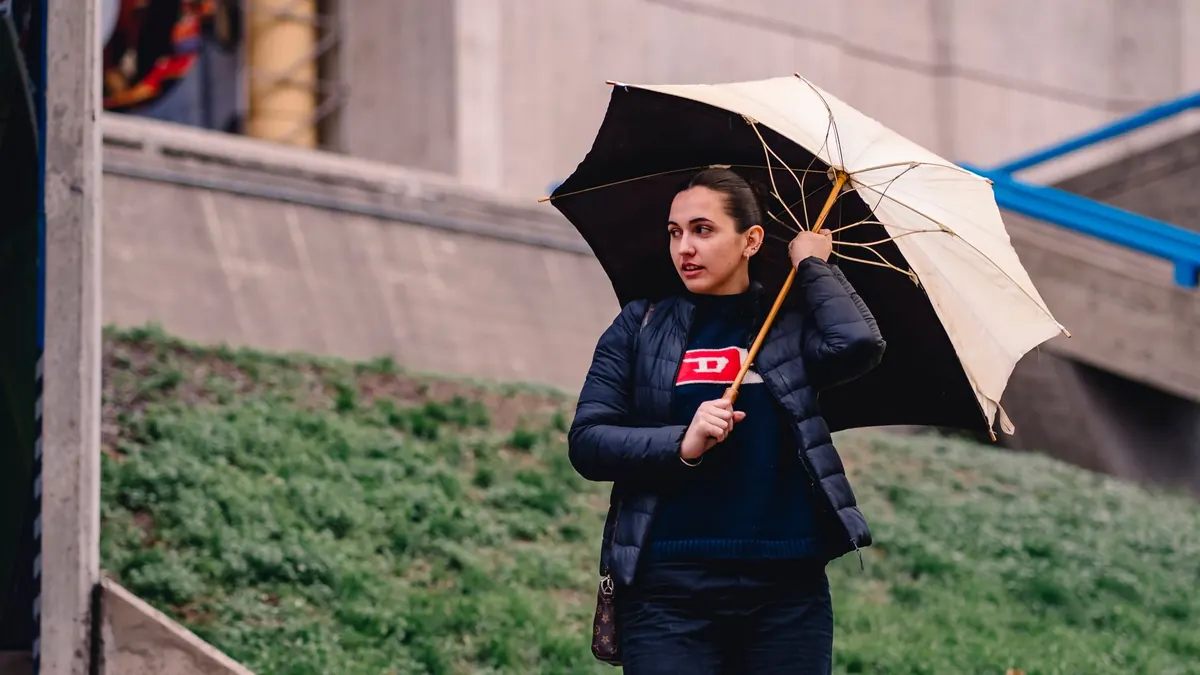
A small trekking umbrella weighs little and solves problems a hood cannot. It keeps rain off your glasses, lets you eat with two hands, shelters a map or camera, and gives you a dry pocket of air when you are standing still. On exposed, windy paths a hood is better; in shelter, or in steady vertical rain, an umbrella wins.
Look for a vented canopy that lets gusts pass through, a shaft with a little flex, and a grip you can hold comfortably in gloves. If you walk with poles, decide whether you are happy to stop and switch hands. Some packs take a clip that holds the shaft against a shoulder strap, which is worth the small weight if you use it often.
The Small Things That Change the Day
- Brimmed cap worn under your hood, so rain runs off the peak instead of down your face.
- Neck gaiter to stop drips running inside your collar.
- Waterproof phone pouch on a lanyard, so your phone stays usable and reachable.
- Lightweight sit mat for wet logs, damp rocks and cold stone walls.
- Microfibre cloth for glasses, camera lenses and a fogged-up screen.
- Spare socks in a sealed bag. Dry feet at the end of the day are a small luxury.
- A couple of zip-seal bags for a wet map, a half-eaten snack or a muddy pair of gloves.
Packing It the Night Before
Lay everything out the evening before and pack in this order: liner in, dry sacks filled, then accessories in pockets you can reach without taking the pack off. Test the umbrella and the cover at home, in the garden, so you know the cover fits and the umbrella opens with cold hands.
Afterwards, dry everything before it goes back in the cupboard. Mildew is what kills waterproof kit; a damp dry sack stored in a closed bag will smell by the next trip. Hang gaiters, gloves and covers somewhere airy, turn dry bags inside out, and wipe mud off closures.
None of this is heavy, and little of it is expensive. It is the difference between arriving at the car wet and cross, and arriving tired but dry, still glad you went out.
Photo: 51581 / Pixabay